
Learning to See
Learning to See: Perception, Judgement, and the Moral Education of the Hand

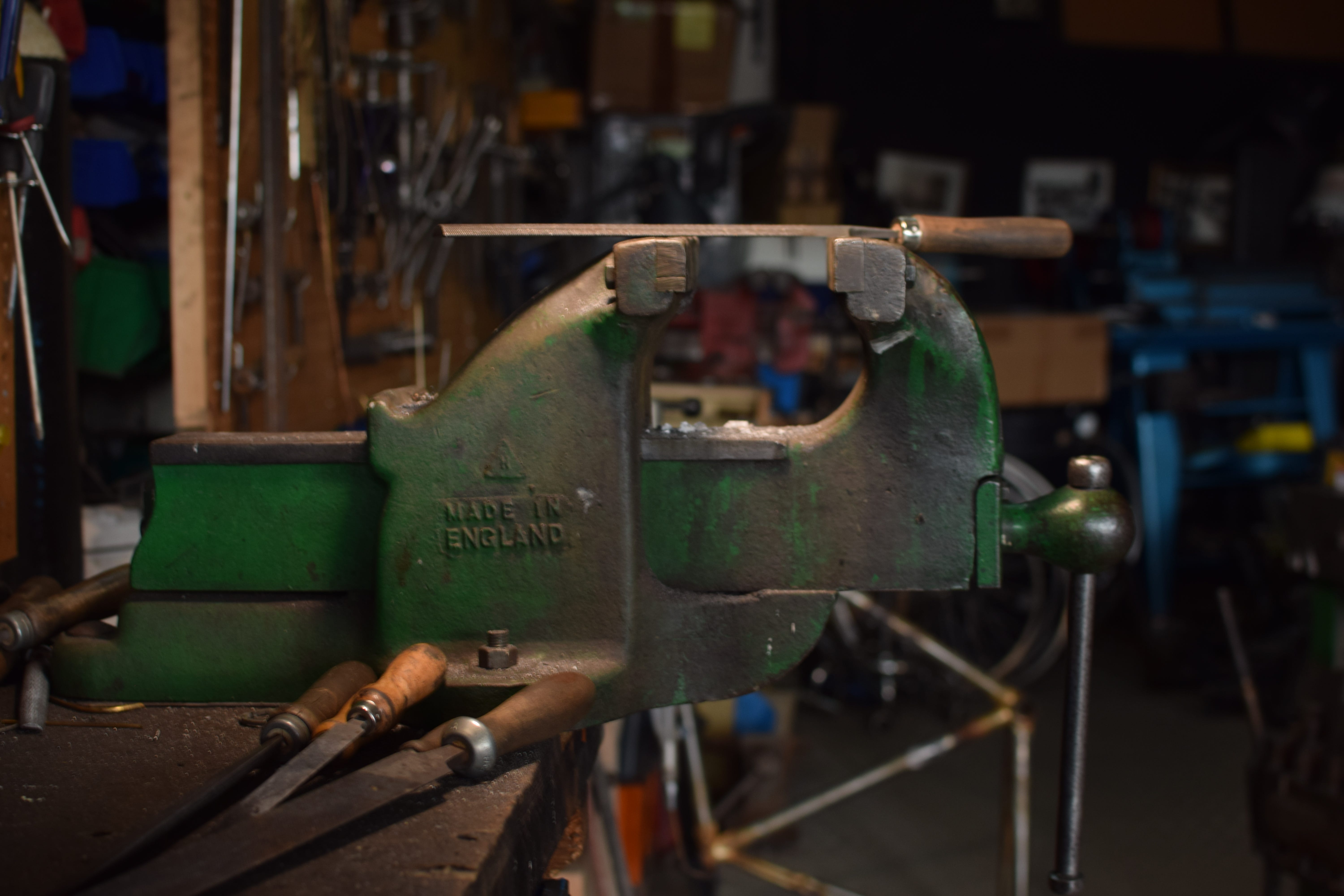
When I teach a novice to file a lug, I find the biggest barrier is not the technique, but the inability to see what I see.
When I look at a lug, I see its imperfections, its slight differences in thickness, the way the file marks flow. But when a novice looks, they just see a lug. To them, it looks finished. In fact, most are surprised that we have an operation to do after brazing at all.
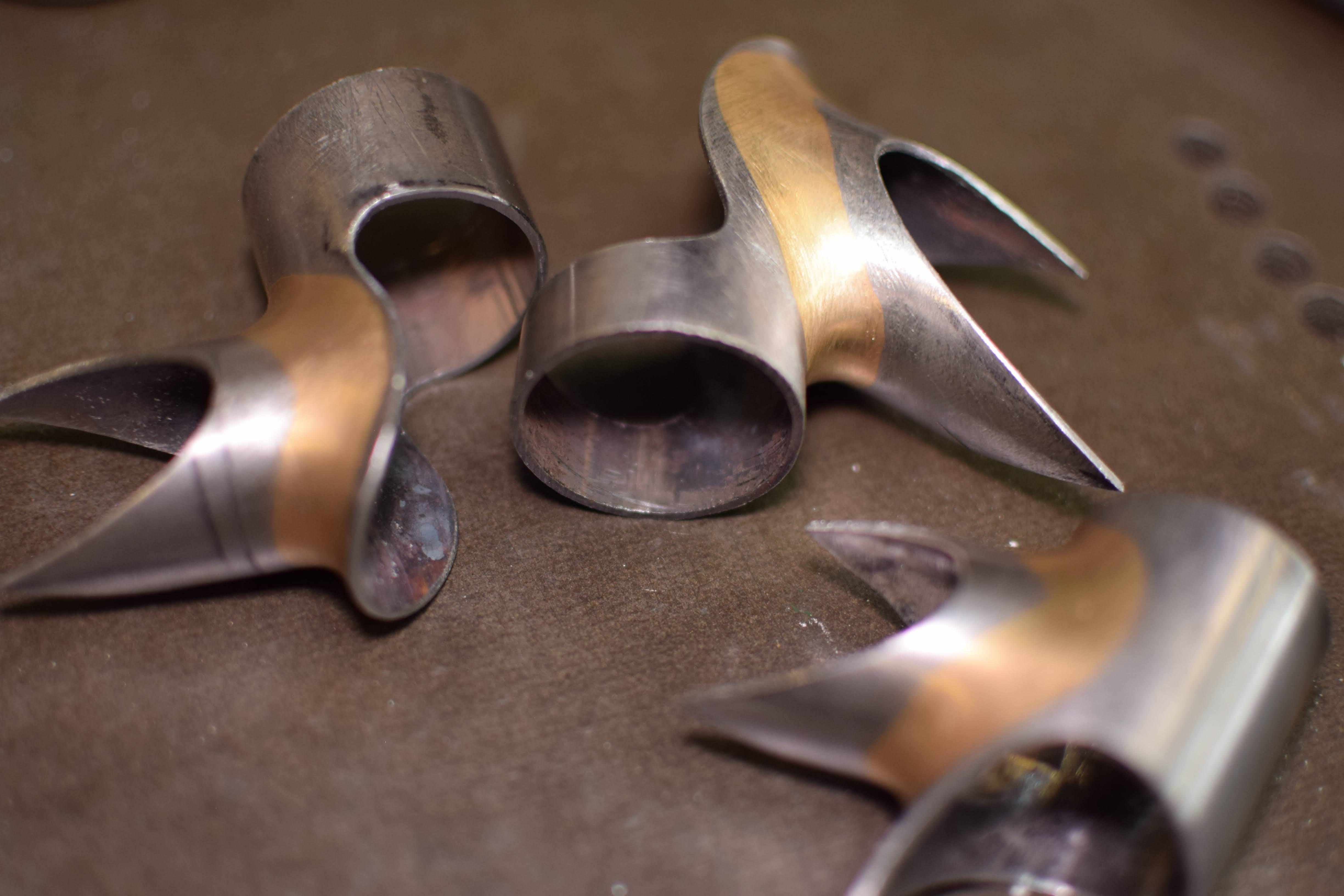
And in a way, they are right. Modern investment-cast lugs are designed for manufacture. They are already as consistent and thinned as possible, made to look almost complete the moment the flux is washed off. That design suits production, where the goal is uniformity. It allows a factory-built frame to get close to the look of a handmade one.
But most framebuilders still do finishing work on each lug. Not as much as in the days of crude pressed steel, but enough to make every joint look uniform and alive. It is quiet, methodical work. It takes patience and an eye that can read the surface like a map.
When the novice approaches this task, before they have gained that eye, they cannot yet be methodical. They move the file from place to place without rhythm or reason. They don’t yet understand what they are doing, nor do they have the technique to carry it out.
They are not careless. They are blind.
The lug in front of them contains everything they need to know, but they cannot yet see it.
The novice’s blindness – You can’t see what you don’t yet understand
I actually came into framebuilding through mountain biking. After all, I was a teenager in the 90s and road cycling was in decline. I knew I wanted to build frames, but I thought lugged frames were old fashioned.
I started at Ellis Briggs not as an apprentice framebuilder, but as a sales assistant. I ended up proving my usefulness in other areas though.
Appreciation for lugged frames came slowly. Customers would bring their bikes in for renovation and repair, and I’d study each one. The truth is, it took me years to fall in love with lugged frames. It took daily observation over years on the shop floor, first as a sales assistant, then as a mechanic, before I could appreciate the nuance of a well-filed lug.
When I started, I looked at lugs the way a teenager of the 90s was taught to look at things, through the lens of mountain biking, of CNC, of smooth welds and clean joins. Lugs looked clumsy to me, almost like plumbing fittings.
John Berger said that we never just see; we see through what we already know or believe. In my case, what I believed was that progress meant minimalism, that clean TIG welds were modern, and that lugs belonged to another era.
I wasn’t seeing the lug itself, only my idea of it.
Ways of Seeing – The education of the eye through the hand
It took years at the bench to strip that away. Only when I’d handled enough frames, filed enough edges, and watched the light fall on the curves of a finished lug did I start to see what had been there all along.
You can only care about how a lug is filed once your perception is trained to appreciate them and their nuances. They are not all the same at all, even identical lugs are not filed the same by different builders. Once you perceive lugs you can act on them, improve their raw state, refine it and appreciate what techniques to use to shape them.
That’s when you realise the work has changed you. You start to look longer, notice more, and move slower. The file becomes not just a tool for shaping metal, but for shaping attention. What once looked like plumbing fittings now holds the memory of a hundred hands and a century of thought.
That’s when seeing begins.
Once you have internalised the shape of the lug, once you know what it should look like, the act of filing becomes a kind of seeing. You start to read the reflections of light on the surface, noticing whether it breaks cleanly or wavers. You see if the file marks run true, following the line of the tube, or if they drift across it.
Your fingers become part of your eyes. You run them over the surface to feel the smallest imperfections, the faint rise of a high spot or the dip where you went too far. Even the sound of the file tells you something. When the contact is right, it sings in a steady rhythm. When it isn’t, it chatters or scrapes.
This is how the senses begin to work together, each one correcting and confirming the others. Sight, touch, and sound merge until you no longer think about them separately. You are simply present, seeing through the hand.
In these moments, you stop working on the lug and start working with it. You are in conversation with the metal. The line between filing too far and filing just enough is narrow. Every stroke is a decision. You judge what is acceptable based on how you have learned to see the finished lug.
This is where David Pye’s “workmanship of risk” comes in. You can’t put back what you file away. Each stroke carries that risk. It is your judgement, built from experience, combined with technical skill, that keeps you on the right side of it.
That risk is what gives the work its life. Without it, you would only be following instructions. With it, you are present, responsible, and awake to what your hands are doing. That is the beginning of craft.
The Japanese apprenticeship story – Knowledge stolen with honour
When American boatbuilder Douglass Brooks apprenticed to a Japanese barrel-boat maker, he found that the master offered no instruction, only access. The apprentice was expected to watch, to steal knowledge through observation. Silence in the workshop forced attention. At night, it was common for apprentices to return, studying the master’s work in secret. One day, the master handed Brooks some pieces to make, left for the afternoon, and later returned to sort them, “hai!” for the good ones, silence for the rest.
This forces the apprentice to pay attention at all times, and really study his master working and the items he’s making.
After learning about this, I looked back at my own more informal apprenticeship and I noticed the same pattern. As a young mechanic, with an interest in framebuilding I would venture into Andrew’s workshop after he went home at half past four. I wanted to see the process. Andrew was always quite secretive, and maybe a bit hostile to visitors in his space, especially one like me. I had to earn the right to his time, and that took the best part of a decade.
In that time, I spent hours in close proximity to lugged frames, finished and painted, ready for blasting, ready for paint, and every stage in between. I paid attention to the way they were filed, the direction of the file marks, the flow of the line around each shore.
I didn’t do any of this consciously, or at least not with any plan. It was simple curiosity. But looking back, that curiosity was the beginning of learning to see.
Seeing as moral formation – When the eye becomes conscience
This is the backbone of my moral view of craft. It begins with learning to see.
Once you have learnt to see, it is impossible to unsee. You can’t ignore file marks or divots you’ve cut too deep. But if you can’t see them, they might as well not exist.
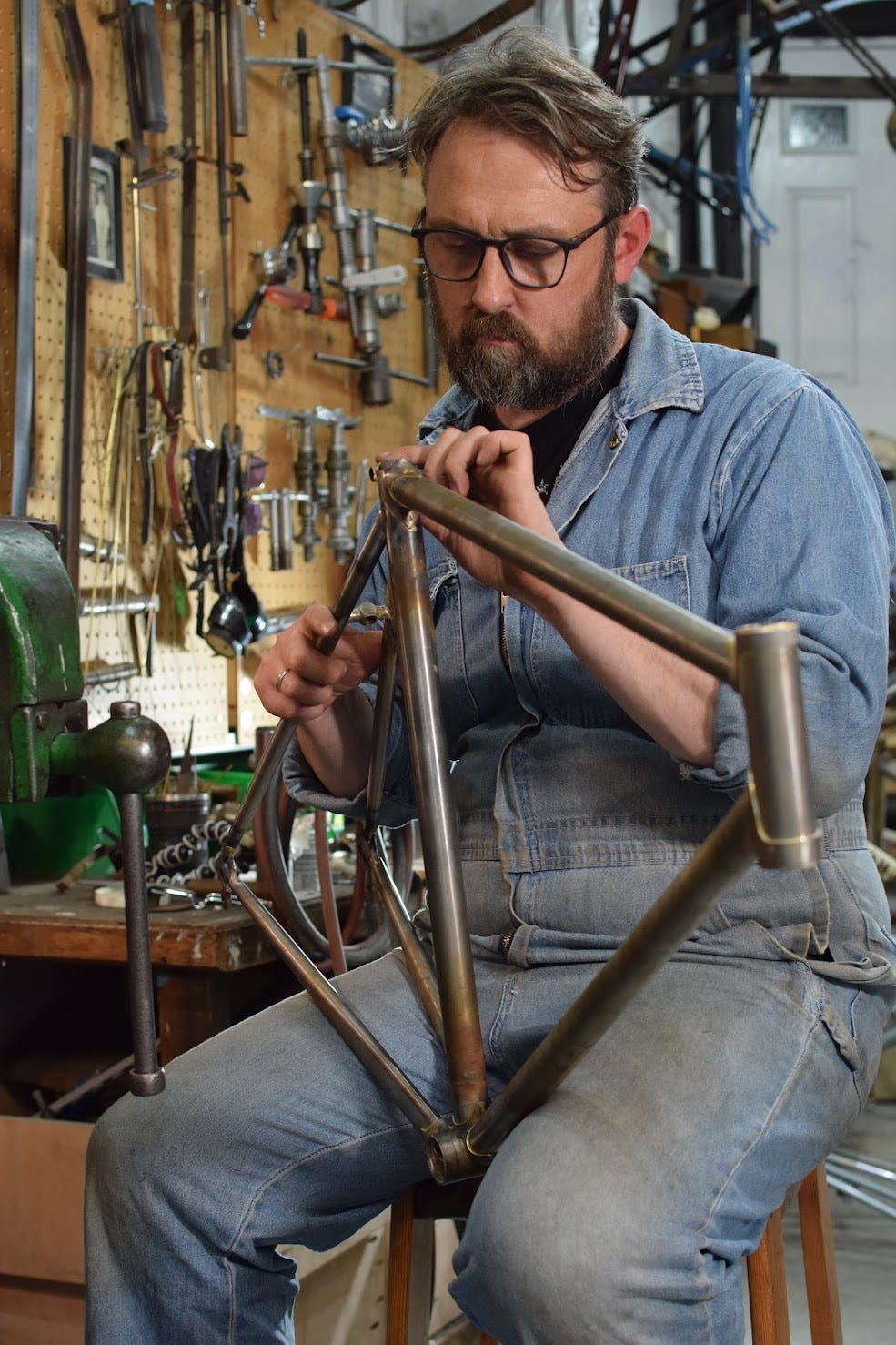
For me, once I’ve noticed a flaw, I’m compelled to put it right, at least to the point where I can live with it. Sometimes that means filing and thinning until the lug is as clean as I can make it. Other times it means stopping short but keeping the lines sharp and uniform. I always want to do the best work possible, but there is a limit. In an ideal world I’d keep going, chasing perfection. In the real world, I want my frames to stay accessible, made for riders, not collectors.
Richard Sennett once wrote that the craftsman’s desire to do a job well for its own sake is a moral impulse. I think about that a lot. It isn’t pride or perfectionism, it’s a kind of honesty. When you’ve learnt to see, you can’t pretend not to. The work holds you to account. You want to put it right, not for applause, but because the material deserves that care.
In British framebuilding there has always been a fine balance between quality and affordability. Handmade frames were never meant to be boutique objects. They came out of a working-class ethic, built for working people. The craft grew out of utility as much as beauty.
Sennett saw craftsmanship as a civic virtue, a way of binding individual skill to collective good. That feels close to how I was taught. High standards, but not so high that the work became exclusive. The point was to make something well for ordinary people, not to elevate yourself above them.
That is how I was taught: high standards, but not so high that the work became unreachable. Both are moral positions, the refusal to let something go before it is right, and the refusal to let perfection turn into exclusion. Somewhere between those two lies the tradition of the British handmade frame.
To see properly is to care, and to care is to judge. The trained eye becomes a kind of conscience, always there, asking whether the work still honours the people it was made for.
When a craft is broken down into sections to make it fit a factory process, the maker’s responsibility changes. Each worker owns only a small part of the whole. The moral imperative to do a good job becomes blurred, shared among many, and depends on the integrity of the system rather than the conscience of the individual. It often turns into just a job. That’s why you can find flaws in production frames even when the people making them are highly skilled.
Sennett called this the danger of divided labour, when work becomes too narrow, skill survives but meaning fades.
Framebuilding is not neutral, the framebuilder operates from his conscience.
As Richard Sachs told me, a framebuilder isn’t someone who makes a frame, but someone who’s made it to the other side. That insight, the sense that real seeing comes only after thousands of repetitions, captures the same moral journey I see in every apprentice who learns to notice what they once overlooked.
Closing reflection – The moment of recognition
In recent years, the line between the old builders and the new has been broken, and with it, the habit of learning to see has been forgotten. Without it, framebuilding looks from the outside like a list of procedures to follow. But without learning to see, there is no judgement. The framebuilder can’t truly assess their own work or worse, they think they can, but they can’t see what they can’t see.
To many who come from academic or book-smart backgrounds, that idea sounds like nonsense. It’s an alien concept because it has been stripped out of education along with most practical skills. So there’s a kind of incredulousness when you say that framebuilding is not just a series of steps written down in order, but a moral act. They see it as neutral, mechanical, like arithmetic. What ethics could there be in 2 + 2?
I’ve seen this often when I talk to people who come to framebuilding from a theoretical or engineering background. As soon as I start talking about philosophy, their eyes glaze over. They tell me I’m talking nonsense. To them, what does philosophy have to do with designing a bike?
But they miss the point. Framebuilding is not bike design. It’s not manufacturing. It’s craft. It’s about making a bike frame, one frame, for one person, to fit their needs. It’s about care as much as geometry, judgement as much as measurement.
Craft includes the whole process from start to finish. It carries the maker’s attention from the first cut to the last touch of emery paper. And philosophy is not something added on at the end. It is the foundation.
The bedrock of that philosophy is learning to see.